
Question-led comparison GLP-1 tablets vs injections guide tablet vs injection medication decision wegovy pill vs injection comparison
Why GLP-1 tablets vs injections is not a simple route question
This is one of the most natural questions people ask when tablet interest rises. The problem is that it sounds simpler than it is. “GLP-1 tablets” can refer to different product stories, and route alone does not answer everything people really mean by “work as well as”. In the UK, the comparison also depends on what is actually available, what the exact product is, how the route is explained by providers, and whether the person asking is really talking about results, routine, trust or access.
Published: 14 May 2026 | Last checked: 13 July 2026 | Category: Comparisons
Short answer
The route is only part of the answer
A question like “Do GLP-1 tablets work as well as injections?” mixes together several ideas at once: effectiveness, routine, convenience, current UK access, personal suitability and trust in the route itself. Tablet and injection routes should not be treated as interchangeable just because they involve the same medicine class.
- Route alone does not settle the comparison.
- The exact medicine and product context still matter.
- Live UK tablet and injection routes can both be compared, but only after the exact medicine and licence are identified.
- Clinical assessment still decides suitability.
- Broad provider or headline wording can make the comparison sound simpler than it is.
Why “work as well as” is not one question
Most people asking this question are not only asking about one clinical metric. They are usually bundling together practicality, product familiarity, UK access, routine fit and trust in the route itself. In other words, it is often several smaller questions hiding inside one sentence.
They may mean:
- Would a tablet route feel easier to fit into daily life?
- Would it feel like a realistic alternative to injections?
- Would it be available through UK providers?
- Would the routine and product instructions be easier for them personally?
- Would the whole route feel simpler once products are actually comparable?
That is why a simple route verdict rarely helps much on its own. The answer changes depending on the exact medicine, the current UK route and whether the comparison is practical yet rather than just theoretical. A useful comparison needs to make that complexity feel clearer, not bury it under a quick yes-or-no headline.
Why the comparison is not just one line
These are the practical dimensions that usually matter more than a quick yes-or-no answer.
| Comparison point | Tablet route | Injection route | What matters in the UK |
|---|---|---|---|
| Current comparison readiness | Live products can be compared, but the licence, dose ladder and administration rules remain product-specific. | More established for current UK private comparison in some licensed products. | Compare the exact tablet and injection products rather than treating either route as one category. |
| Routine | May sound simpler to some people because it avoids an injection route. | May suit others perfectly well once they understand the routine. | Personal preference still does not replace product-specific assessment. |
| Search confusion | Includes live Wegovy tablet searches, Rybelsus confusion, future-product interest and generic category demand. | Often refers to more established current products. | The tablet side of the comparison is still less straightforward. |
| Provider comparison | Provider pages may describe live supply, introductory offers, standard prices, waitlists or future products; those signals must stay separate. | Current provider routes are easier to describe and compare in public. | Confirm that the page names a live medicine, dose and standard price rather than only an offer or waitlist. |
Why the UK angle changes the question
In the UK, both tablet and injection routes can now be compared, but they should be compared medicine by medicine. Wegovy tablets have a different dose ladder, administration routine and provider market from Wegovy injections, while Rybelsus has a separate type 2 diabetes licence.
The UK-first answer is therefore to identify the exact product and licensed use, then compare dose, provider support, administration and price. A route-only comparison can hide differences that matter more than whether the medicine is swallowed or injected.
Why route preference should not be treated as the whole answer
Many people ask this question because a tablet route sounds more convenient than an injection route. That instinct is understandable, but convenience is only one part of the comparison. The named medicine, current UK access, provider process and safety framing still matter before the route question becomes genuinely useful.
That is why route-first searches need a calm reading. The page works best when it slows the comparison down and separates practical preference from product reality.
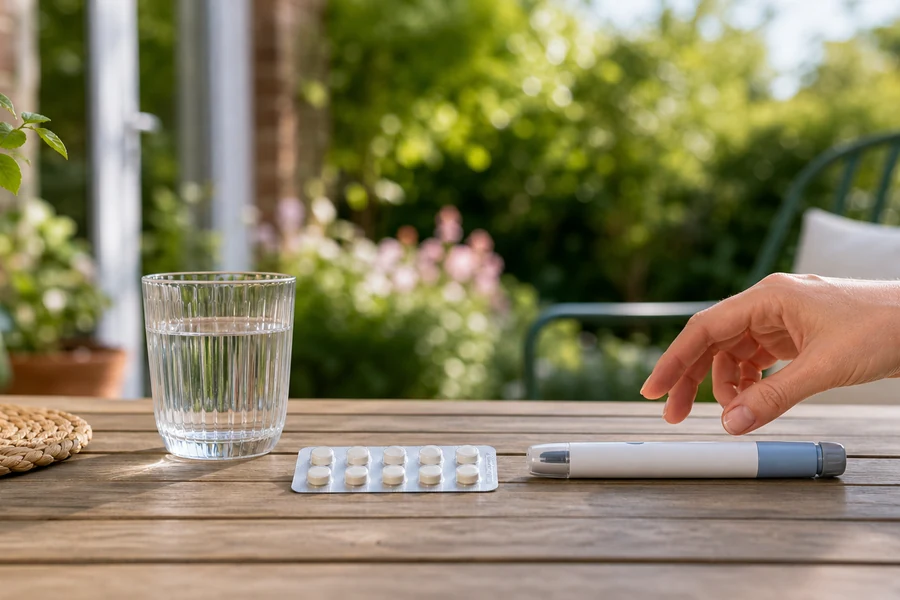
What makes the comparison genuinely useful
These checks are usually more useful than chasing a one-line route verdict, because they turn a route debate into a grounded UK comparison.
Exact product
Know whether the question is about Wegovy tablets, Rybelsus, another oral medicine or a specific injection.
Current UK access
Check the named medicine’s current licence, provider availability and public dose pricing.
Provider explanation
Look for clear consultation, prescription and supply wording for the named medicine.
Routine fit
Think about route preference as one factor, not the whole decision.
Safety context
Prescription-only medicines still require clinical assessment whichever route is being discussed.
Comparison timing
Use current provider and dose evidence for live medicines, while keeping products still in development in a separate watchlist.
In other words, route only becomes a strong comparison point once product, access and provider context are stable enough to support it. Until then, it is one part of the answer rather than the whole answer.
What can make a route verdict misleading
A quick “tablets are better” or “injections are better” verdict usually skips the parts that matter most in the UK: the exact medicine, the real provider route, whether the product is actually comparison-ready, and what the public evidence says today. Route preference matters, but it should sit inside a product-specific comparison rather than replace it.
That is why a careful UK comparison starts with the named medicine and current route, not with a winner-versus-loser headline.
Provider claim warning
Be cautious with simple “tablets vs injections” sales language
If a page makes the comparison sound easy without naming the product clearly, explaining the route properly or separating current access from future interest, slow down. A careful comparison needs to explain what can actually be checked now and what still depends on future UK product and provider evidence.
Use Compare providers and How to check GLP-1 tablet provider claims before relying on simplified route language.
FAQ
Common questions
Is a tablet route automatically easier?
Not automatically. Route preference is personal, and product-specific instructions still matter.
Can this question be answered properly without checking the exact product?
No. The exact medicine and current UK route need to be clear first.
Why is the tablet side of the question still complicated in the UK?
Wegovy tablets and Rybelsus have different uses, doses and routines, and provider prices can vary by strength, offer type and included support.
What should I read next after this question?
Use the full route guide, the GLP-1 tablets UK page and the provider comparison pages together.
Related pages
GLP-1 tablets vs injections
Use the fuller route-comparison page for the complete UK framework.
GLP-1 tablets UK
Check what is currently established and what still needs separate UK verification.
What people mean by a GLP-1 pill
Separate search-term confusion from product-level comparison.
Wegovy pill UK
Compare the live UK Wegovy tablet route, its dose ladder and current provider prices.
Compare providers
See how provider information is handled before treating routes as comparable.
Sources and methodology
See how product status and pharmacy pages are reviewed across the site.
Information only
Tablet Compare is information and comparison only. GLP-1 medicines are prescription-only medicines, provider details can change, and suitability depends on clinical assessment. Avoid unregulated sellers or any route that skips proper consultation.